Curio - Antique Identifier
- 4.7
- Rating
- 100.00K
- Installs
- Free
- Price

 Analysis by App-foxy
I approached Curio - Antique Identifier as a practical first stop for the familiar question, “What is this old object?” After using it with the kind of photos people usually have available at home, my view is straightforward: it is most useful as a quick orientation tool, not as a final authority on value or authenticity. That distinction matters, because identifying an attractive vase, inherited brooch, coin, painting, or piece of furniture is often the beginning of research rather than the end.
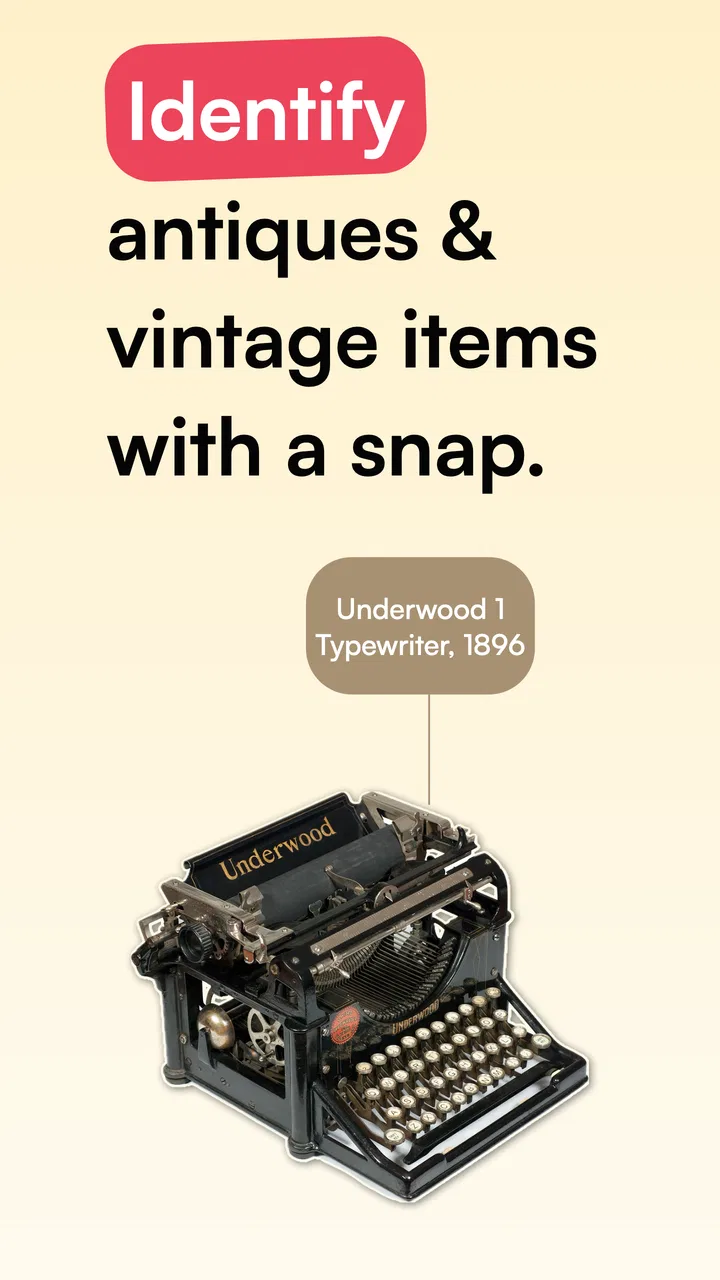
Curio is a free lifestyle app from Dionysus Labs, LLC, built around identifying antiques, vintage objects, jewelry, art, and coins from pictures. Its broad appeal is easy to understand. Instead of searching through several categories and trying to describe an unfamiliar object with the right specialist vocabulary, I can begin with an image and use the result to decide what to investigate next. For casual owners, estate-sale visitors, and people sorting through family belongings, that can save a lot of time.
The app has earned a 4.6 average from around 2.8 thousand ratings, with more than 100 thousand installs. Those figures suggest that it has found a real audience among people who want a convenient way to explore objects around them. It is rated for Everyone, so the presentation is approachable rather than aimed only at professional dealers or collectors. I also found the low barrier to entry important: the app is free to install, although in-app purchases range from $4.99 to $59.99 per item.
You May Also Like

 Pandora - Music & Podcasts
Pandora’s Music Is Easy to Start, but Harder to Recover
Pandora’s strength is its low-effort path from a seed to a station. Its weak spot is how much confidence it asks you to place in connection, setup, and quiet recovery.

 AccuWeather: Weather Radar
AccuWeather Review: A Quick, Clear Forecast for Everyday Decisions
For everyday plans, the best forecast is the one you can understand quickly. AccuWeather makes rain timing, radar, and local conditions easy to act on, with a few trade-offs.

 Hill Climb Racing
Why Hill Climb Racing Still Turns Crashes Into One More Run
A tiny car, a bumpy hill and one more upgrade: Hill Climb Racing keeps resurfacing because its simple chaos makes every near-miss feel personal.

 AliExpress - Shopping App
AliExpress Makes Global Shopping Feel Personal, but Shoppers Bear the Risk
AliExpress turns a global marketplace into a pocket-sized discovery engine. Its reach is useful, its shopping loop compelling, and its trade-offs easy to miss.

 Lords Mobile: Kingdom Wars
Lords Mobile Is a Kingdom-Building Routine, Not a Quick Match
A case-by-case verdict on the building, battles, device demands, and social commitments that make Lords Mobile rewarding for some players and exhausting for others.

 PDF Scanner app - TapScanner
TapScanner Makes Paperwork Easier to Capture, Check, and Share
TapScanner makes scanning with a phone feel less like a rescue operation and more like a dependable step in getting work done. Its capture tools are useful, though not flawless.
More From Our News Desk
View All News


What Curio does well when a photograph is only the beginning
The strongest part of the experience is the way it changes the first step of research. Normally, I might photograph an object, open a search engine, and try combinations such as “old silver bowl,” “blue ceramic mark,” or “vintage necklace.” That method depends heavily on knowing what details matter. An image-based identifier gives me a possible direction before I start building those search terms myself.
That is especially helpful with objects that have several plausible descriptions. A decorative item may be mistaken for a serving piece, a reproduction may resemble an older design, and a piece of jewelry may be described by its shape rather than its period. Curio’s focus on antiques, vintage pieces, jewelry, art, and coins makes it more relevant to this sort of visual uncertainty than a general image-search tool.
I would use it in stages. First, I would take a clear picture of the whole object. Then I would photograph the details that could change the interpretation: the underside, a maker’s mark, a signature, a clasp, a hallmark, a coin’s edge, or damage. The first result is useful as a hypothesis. The second round of images is where I would test whether that hypothesis still makes sense. The most valuable habit is treating every identification as a research lead rather than a certificate.
Why image preparation changes the usefulness of the result
Good lighting matters more here than many new users expect. A reflective silver object can hide engraving under a bright glare, while a dark wooden item can lose its carved details in a shadow. I get more useful results by placing the object on a plain surface, avoiding harsh reflections, and taking one full view before moving closer. A cluttered background may not prevent recognition, but it makes the image less informative for my own later comparison.
For coins, I would capture both faces and the edge instead of relying on a single close-up. For jewelry, I would include the setting, back, clasp, and any visible marks. For paintings, the frame and rear construction can be as informative as the front, so a front-only photograph gives an incomplete picture. These are not glamorous tricks, but they make the app more useful because they turn a casual snapshot into evidence that can be checked.
One non-obvious benefit is that the process encourages me to notice details I might otherwise ignore. Taking a second image of a stamp or signature often reveals that the object is not what I first assumed. Even when the app does not settle the question, it can help me slow down and inspect the piece systematically. That is a real strength for beginners who might otherwise jump directly to a price search.
A realistic use case: sorting an inherited collection
Imagine finding several boxes of belongings after a relative moves home. There may be costume jewelry, old coins, framed prints, serving pieces, and objects with no labels. Hiring a specialist to examine everything immediately may not be practical, while throwing items into a general web search can produce an overwhelming mix of unrelated results.
In that situation, I would use Curio to create a rough first-pass inventory. I would photograph each object, note the app’s suggested category or identity, and separate the items into groups: likely decorative pieces, objects with visible marks, potentially valuable materials, and items that remain unclear. The app would not replace an appraiser, but it could help me decide which pieces deserve careful handling and professional attention first.
The same workflow works for a flea-market purchase. If I see an unfamiliar brooch or small ceramic object, a quick image-based check may give me enough context to decide whether I want to research it further. I would still inspect the construction, condition, provenance, and seller’s description rather than making a purchase solely because an app suggests an appealing label.
Where the app is more useful than ordinary searching
Traditional searching remains better when I already know the maker, model, period, or exact inscription. If a vase clearly carries a readable manufacturer’s mark, typing that mark into a specialist reference or auction archive may produce more precise information than an image match. Curio has an advantage earlier in the process, when I do not yet know the vocabulary needed for a productive search.
It also feels more convenient than browsing broad collector forums when I only want a preliminary idea. Forums can provide richer human judgement, but they require writing a careful description, uploading images in the right format, and waiting for responses. Curio gives me an immediate starting point, which is useful when I am standing in a shop or working through a crowded storage room.
On the other hand, specialist databases and experienced dealers are stronger for attribution, market context, and authentication. A professional can examine physical weight, materials, construction, repairs, and provenance in ways a photograph cannot fully communicate. My comparison is therefore not “app versus expert”; it is “fast visual orientation versus deeper verification.” Curio wins the first stage, while specialist research wins the final decision.
The important limits before trusting an identification
The central weakness is inherent in the format: a picture can suggest what an object resembles, but it cannot reliably prove age, material, authenticity, or market value on its own. Two objects can look nearly identical while differing substantially in manufacture and worth. A reproduction may share the same decorative language as an original, and a damaged or altered piece may confuse even a knowledgeable observer when only one angle is available.
I would be particularly cautious with coins and jewelry. Small differences in lettering, edge treatment, metal content, stone setting, and wear can matter greatly. A visually convincing result should not be used as the sole basis for selling an item, paying a premium, insuring a collection, or deciding that something is genuine. For those situations, I would take the app’s suggestion to a qualified appraiser, dealer, auction house, or relevant specialist.
There is also a practical risk of false confidence. A polished identification can feel more definite than the available evidence deserves. My solution is to record the result with the original photographs and then look for confirming details. Does the suggested maker use that mark? Does the construction fit the proposed period? Are the dimensions, materials, and wear consistent? If the answer is no, I treat the result as a prompt to investigate alternatives.
Another trade-off concerns the purchase model. The app is free to start, which makes experimentation easy, but the available in-app items cost between $4.99 and $59.99 each. I would not spend money simply because an object looks promising. Before making a purchase, I would decide what question I need answered and whether the result could reasonably affect my next decision. For casual curiosity, the free entry point may be enough; for repeated research, the cost structure deserves attention.
Who should use it, and who should choose something else
Curio is a good fit for a curious homeowner, a beginner collector, someone clearing an inherited collection, or a shopper who wants a quick second opinion before doing deeper research. It is also helpful for people who struggle to describe visual objects in words. The image-first approach lowers the vocabulary barrier and makes the first research step less intimidating.
I would recommend it to a person who wants to organize questions, not to someone who needs a formal valuation. If your main goal is discovering possible categories, makers, styles, or research terms, the app can be genuinely useful. If your goal is proving authenticity, setting an insurance value, or confirming a high-stakes purchase, a specialist service is the better choice.
Professional collectors may find it most valuable as a quick screening aid rather than a replacement for their existing references. Someone who already knows how to examine hallmarks and construction may not need the app for familiar objects, but it can still help when an item falls outside their usual area. Conversely, a user who expects every photograph to return a precise answer may be disappointed by the uncertainty that comes with unusual, damaged, poorly lit, or heavily reflective objects.
The age rating of Everyone makes it accessible for family use, and the app’s lifestyle category fits its broad, exploratory purpose. Still, accessibility should not be confused with professional reliability. A simple interface can make research easier without removing the need for judgement. That is the balance I would keep in mind before recommending it for valuable possessions.
What I would do after receiving a result
I would save the original object photos, write down the suggested identification, and photograph any markings separately. Next, I would compare the proposed details with reputable references or a specialist community. If the object appears valuable, I would seek an independent opinion rather than presenting the app’s result as proof to a buyer.
For an item I plan to sell, I would describe it conservatively unless the attribution has been verified. “Appears consistent with” is more responsible than making a definite claim based on one image. This approach protects both the seller and the buyer, and it prevents a convenient identification tool from becoming a source of accidental misinformation.
For an item I plan to keep, the app can still be worthwhile even without a perfect answer. It may give me useful terminology for cataloguing a collection, suggest a period to research, or point out a detail worth photographing. In that role, it becomes less about guessing a price and more about making an unlabelled object understandable.
The current version is 1.8.4, and the app supports devices running Android 7.0 or later. That broad compatibility is helpful for users who do not own a recent phone, particularly when an older device is being used to document household belongings. I would still judge the experience by the quality of the photographs I can produce, since the camera and lighting setup remain just as important as the software.
My final view after using it as a research companion
Curio - Antique Identifier succeeds when I use it for what it is best at: turning an unfamiliar photograph into a sensible starting point. Its coverage of antiques, vintage objects, jewelry, art, and coins gives it a clear purpose, and its free entry makes it easy to test on items already sitting in a drawer, cabinet, attic, or inherited collection.
I would recommend it to anyone who wants a quick visual clue and understands that identification is a process. The app can save time, improve the questions I ask, and help me decide which objects deserve deeper attention. Its most useful contribution is not an instant verdict but a better first step, especially when I have no idea how to describe what I am looking at.
I would not use it alone to authenticate a rare coin, price valuable jewelry, establish an antique’s provenance, or make a major purchase. Those decisions need physical inspection and independent expertise. The in-app purchase range also means frequent users should consider their spending before treating it as a complete research service.
For casual discovery and early-stage sorting, though, I find the app worthwhile. It is approachable, focused, and practical when paired with careful photography and healthy skepticism. If you want a friendly way to begin investigating the objects around you, Curio is a sensible companion; if you need certainty, take its suggestion to a real specialist before money or reputation depends on it.
FAQs for Curio - Antique Identifier
01What is Curio - Antique Identifier used for?
Curio - Antique Identifier is designed to help users learn more about antiques, collectibles, and vintage objects by analyzing photos and providing identification suggestions. It can be useful when you discover an unfamiliar piece at home, a flea market, or an estate sale. The app is best treated as a research aid rather than a definitive appraisal service, especially for rare or valuable items.
02How accurate is Curio - Antique Identifier when recognizing antiques?
The app can offer helpful starting points, but its results should not be considered guaranteed. Recognition may depend on image quality, lighting, viewing angle, visible markings, and how unusual the object is. Similar-looking antiques can differ significantly in age, origin, and value, so users should compare the suggested information with reliable reference sources or consult a qualified specialist before making an important purchase or sale.
03What kind of photos should I take for the best results?
For more useful identification suggestions, take clear, well-lit photos with the entire object visible and avoid reflections, shadows, and cluttered backgrounds. It is also helpful to photograph maker’s marks, signatures, labels, stamps, serial numbers, construction details, and any damage separately. Multiple angles can provide additional context. Blurry or heavily cropped images may lead to incomplete or inaccurate results.
04Can Curio - Antique Identifier determine the monetary value of an item?
Curio may provide information that helps you understand an object’s possible identity, style, or historical background, but an automated estimate should not replace a professional valuation. Antique prices depend on authenticity, condition, provenance, rarity, current demand, and regional market conditions. If you are insuring, selling, or purchasing an expensive piece, obtain an independent appraisal and verify comparable auction results.
05Is Curio - Antique Identifier free to use, and does it require personal data?
Before downloading, review the current store listing because availability, features, subscriptions, and in-app purchase terms can change between Android and iOS versions. Photo-based identification may require camera or photo-library access, and some functions could depend on an internet connection or an account. Check the app’s privacy policy to understand how uploaded images and other information are collected, stored, and used.
Pros
- Identifies many antiques
- collectibles
- and vintage objects from a single photo.
- Provides useful historical context and background for recognized items.
- Simple interface makes scanning an object quick for beginners.
- Helpful for organizing discoveries while browsing flea markets or estate sales.
- Can suggest identifying details to check before researching an item further.
Cons
- Photo results may be inaccurate for rare
- damaged
- or poorly photographed objects.
- Estimated values should not replace advice from a qualified appraiser.
- Some useful features may require a subscription or in-app purchase.
- Recognition quality depends heavily on lighting
- focus
- and the visible markings.
- The app cannot guarantee authenticity or detect sophisticated reproductions.

Curio - Antique Identifier
Gallery